

Defamation, Libel and Slander
Words written and spoken can Damage Reputation
The origins of libel and slander come from laws defines in the law of the Roman republic and developed through the English ecclesiastical courts. By about the fifteen hundreds, common law courts in England and the colonies began hearing cases about reputation damages, accusations of crime and professional damage. This is a law that has developed over time through both criminal and civil courts.
Libel is defamation in a written or permanent, or electronic form. Slander is defamation in transient form, i.e. spoken word. Historically libel would have been in a written form only. With the advent of voice recording and the permanancy today of spoken word in Social Media "defamatory remarks made by a radio broadcaster were actionable as libel, not slander", per WIC Radio Ltd. v. Simpson, 2008 SCC 40, and supported by Section 1(2) of the Libel and Slander Act.
If a person stands on their soapbox at a busy intersection and shouts a defamatory statement about a person, then that is slander. Should a reporter have an open microphone that records every word then it become defamation
Take a look at our episode of Spin Legal about Defamation for a dicussion between Peter Giblett and Angela Browne about this topic:
One of the key factors of libel is that it forms a part of the protections that are a part of a democratic society. People have the right to criticize their political, religious and business leaders, we expect it in a democracy. However there is a difference between criticism and defamation. Criticism, even of the most severe type does not cross the line to become defamatory. It is permissible to say "I believe your economic policies will lead to disaster," it is not permissible to say, "you are an economic disaster."
Libel and slander can impact normal people and can be the subject of claims at the small claims court. A few examples:
- False statements about a person or business.
- Negative business reviews.
- Accusations you committed a criminal act.
- Claims of professional incompetence.
- False allegations of sexual misocnduct or domestic abuse.
- Spreading false health information.
- False statements about business ethics.
- Allegations that a business performed racial profiling.
- Misleading stories in online posts.
- Bad references.
There is a thin line between criticising someone or their business and being defamatory.
The words must have been published, which means they must have been shown or said to at least one other person, not simply written, or written and shown the the defamed person. It is vital to know that words published within judicial, or quasi-judicial proceedings are not defamatory. They are regarded as allegations, and remain unproven. There are also other exceptions, such as parliamentary privilege, allegations made in parliamentary speeches are not actionable.
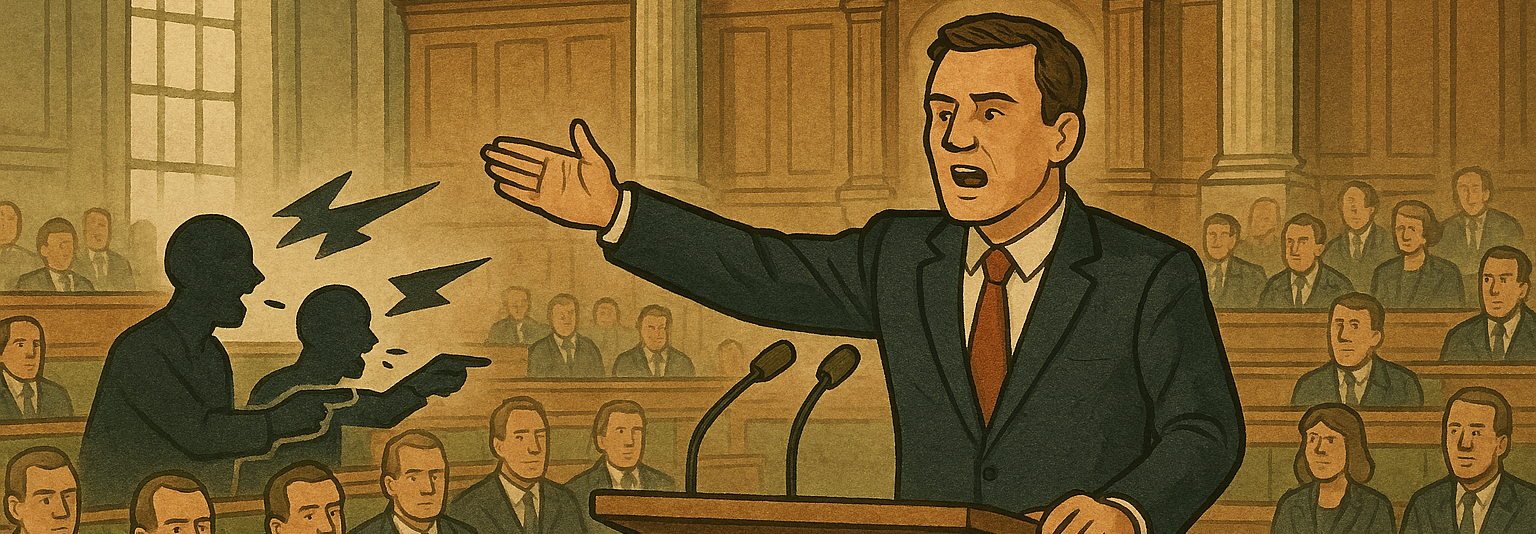
Defamation exists in constant tension with the Canasdian Charter of rights and Freedoms, for example Section 2(b) states that everyone has "freedom of thought, belief, opinion and expression." Thoughts and beliefs remain private, unless spoken in the form of opinion and expression, this is where they can be the subject of defamation.
Libel does not require proof of damages, these are presumed. Slander, however, does require proof of damage.
Defences to Defamation
There are several defences to allegations that you defamed someone.
Truth, or Justification
This defence asserts that the statement made wasn't defamatory. If it's substantially true, this provides a complete defence even if the statement harms someone's reputation, because the law doesn't protect bad reputations. This defence will help the defendant even if the statement contains minor untruths, provided the statement is substantially true, i.e. that the Defendant was justified in making the statement that they did, per Botiuk v. Toronto Free Press Publications Ltd. [1995] 3 SCR 3.
What matters is the overall impression that the Defendant conveyed is the truth. It does not have to be exact.
It is vital to note that, if truth is proven, the defamation claim fails entirely because truth is a complete defence. The Defendant bears the burden to prove the truth of the matter on a balance of probabilities.
Fair Comment
This is an honest opinion on a public matter based on true facts.
This defence protects opinions on matters of public interest, provided the opinion is a. recognizable as comment, and b. based on true facts, and further c. an honest person could hold that opinion.
The comment must be made fairly, case law in WIC Radio v. Simpson (2008) and Hansman v. Neufeld (2023) affirming these principles, especially balancing free expression with reputation protection. Malice can defeat this defence.
The comment must be honest opinions on matters of public interest, traditionally this relates to government and public figures. The concept of "Public Interest" also directly relates to situations where the public needs to know specific facts, serving as a legal and ethical justification for disclosing information that might otherwise be kept private or secret, especially when it concerns health, safety, government accountability, or significant societal issues, balancing individual privacy with collective benefit.
Qualified Privilege
Protects statements made under a legal, moral, or social duty to someone with a corresponding interest, but is lost if made with malice or beyond the scope of the duty.
Absolute Privilege
Complete immunity for statements in certain settings (e.g., parliament, courts).
The reason for this is to protect free, frank, and complete communication in crucial settings like courtrooms, legislative debates, and high-level government functions. This looks at the public interest in truth-seeking and proper governance over an individual's reputation. This privilege ensures judges, lawyers, witnesses, and officials are able to speak without fear of defamation lawsuits, allowing justice and public duty to be served effectively.
This defence is available for journalists, bloggers and publishers of statements. The reason for the defence is to show diligence in verifying allegations about public interest matters. Used by those who report on important public issues, allowing for some factual errors provided they took reasonable steps to verify the information, focusing on public interest, fairness, and accuracy. This defence fails if malice (spite, ill-will) is proven by the Plaintiff..
Spin Legal